Brigitte Bardot Dead at 91: Cause of Death, Funeral Plans, and the Tragic Story of Her Son & Spouses (Full Biography)

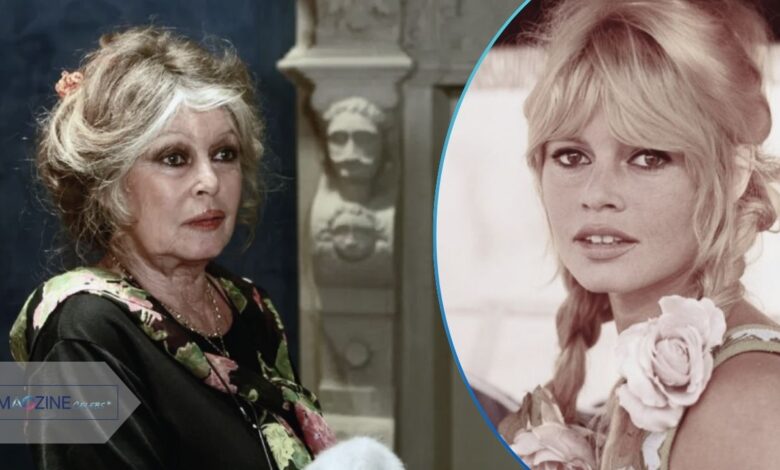
1. Breaking News: The Icon Has Fallen
The world awakens to a seismic cultural loss.
Table of Contents
Brigitte Bardot is dead at 91.
According to early reports emerging from Saint-Tropez, the legendary French actress, model, and activist passed away peacefully at her iconic seaside home La Madrague in the early hours of December 28, 2025.
For more than seven decades, Bardot was not merely a woman of fame — she was a symbol. A provocation. A revolution wrapped in blonde hair and defiant silence. Her death marks the end of an era that redefined beauty, femininity, rebellion, and fame itself.


Once called “the woman who liberated France”, Bardot leaves behind a legacy far larger than cinema. From global sex symbol to radical animal rights defender, her life was a study in contradiction — and courage.
Brigitte Bardot – Quick Bio & Financial Overview
| Category | Details |
|---|---|
| Full Name | Brigitte Anne-Marie Bardot |
| Date of Birth | September 28, 1934 |
| Age (at death) | 91 years |
| Place of Birth | Paris, France |
| Date of Death | December 28, 2025 |
| Place of Death | La Madrague, Saint-Tropez, France |
| Nationality | French |
| Profession | Actress, Singer, Model, Animal Rights Activist |
| Years Active | 1952–1973 (acting), 1986–2025 (activism) |
| Famous For | And God Created Woman, Global Sex Symbol, Animal Rights Activism |
| Spouse(s) | Roger Vadim (1952–57), Jacques Charrier (1959–62), Gunter Sachs (1966–69), Bernard d’Ormale (1992–2025) |
| Children | Nicolas-Jacques Charrier (son) |
| Known For | Bardot neckline, French New Wave, Animal Welfare Advocacy |
| Political Views | Right-wing nationalist (controversial) |
| Foundation | Fondation Brigitte Bardot (Founded 1986) |
???? Net Worth & Financial Breakdown
| Category | Estimated Value / Details |
|---|---|
| Estimated Net Worth (2025) | $60–70 Million USD |
| Primary Income Source | Film & television royalties |
| Film Earnings (Career Total) | $18–22 million |
| Music Royalties | $6–8 million |
| Brand & Image Licensing | $7–10 million |
| Real Estate Holdings | $30–35 million |
| Major Property | La Madrague, Saint-Tropez |
| Luxury Assets | Art collections, jewelry, antiques |
| Annual Passive Income (Est.) | $1.5–2.5 million |
| Charitable Donations (Lifetime) | $25+ million donated to animal causes |
???? Major Assets & Properties
| Property | Estimated Value | Notes |
|---|---|---|
| La Madrague (Saint-Tropez) | $30–35 million | Primary residence, protected coastal estate |
| Paris Apartment (former) | Sold | Used during acting career |
| Animal Shelters (multiple) | Non-commercial | Operated via Foundation |
???? Estate & Inheritance Overview
| Beneficiary | Details |
|---|---|
| Brigitte Bardot Foundation | Primary heir (majority of estate) |
| Bernard d’Ormale (Husband) | Limited inheritance |
| Nicolas-Jacques Charrier (Son) | Minimal or symbolic inheritance |
| Animal Welfare Causes | Long-term beneficiaries through trust |
???? Financial Summary Snapshot
Total Lifetime Earnings: $90–100 million (gross)
Total Wealth Retained: $60–70 million
Money Given to Charity: $25+ million
Most Valuable Asset: La Madrague Estate
2. Cause of Death & Her Final Moments
As of this writing, family representatives confirm that Brigitte Bardot died of natural causes, following a prolonged period of declining health.
Sources close to the household say the former actress had been struggling with chronic respiratory complications, a condition she had openly acknowledged in recent years. Multiple ambulance visits to La Madrague during the summer of 2025 had already raised quiet concern among locals.
In her final weeks, Bardot reportedly remained confined to her bedroom, supported by oxygen and round-the-clock care. Despite offers for hospitalization, she refused to leave her home, insisting she wished to die “where the sea can still be heard.”
At her side were:
- Her husband Bernard d’Ormale
- A small circle of trusted staff
- Several of her beloved animals, whom she considered her true family
Her passing was described as peaceful.
3. Funeral Arrangements & The Question of Her Will
With the world still absorbing the news, attention has turned to what comes next.
Will There Be a State Funeral?
French officials are reportedly discussing a national tribute, though Bardot herself had long rejected public ceremonies. She often stated she did not want “hypocrisy after death.”
Her Final Wish
For decades, Bardot expressed a desire to be buried at La Madrague, her secluded Saint-Tropez estate, surrounded by animals rather than mourners.
However, French law restricts private burials. Authorities are now reviewing whether an exception could be made or whether she will instead be laid to rest at the St. Tropez cemetery, overlooking the Mediterranean.
The $65 Million Question
Bardot’s estimated net worth of $65 million has already sparked debate.
Key questions dominating headlines:
- Will the majority go to the Brigitte Bardot Foundation?
- Did her estranged son inherit anything?
- Were last-minute changes made to her will?
Legal experts suggest her foundation is the primary beneficiary — a final statement of where her loyalties truly lay.
4. World Reaction: Tributes Pour In
Within minutes of the announcement, tributes flooded in from across the globe.
France Reacts
President Emmanuel Macron released a statement praising her as:
“A woman who gave France a face the world could never forget — and a conscience it could never ignore.”
Flags at cultural institutions were lowered, while fans gathered outside La Madrague, leaving flowers, candles, and handwritten notes.
Global Voices
- Animal rights organizations hailed her as a pioneer who “did more for voiceless beings than any celebrity in history.”
- Filmmakers and fashion houses credited her for reshaping female autonomy on screen.
- Social media trended with #BrigitteBardot and #BBForever within hours.
5. Early Life: The Girl Before the Legend
Long before she became an icon, Brigitte Anne-Marie Bardot was born in Paris, 1934, into a wealthy but emotionally rigid Catholic household.
She was not considered beautiful as a child.
She wore thick glasses, suffered from poor posture, and endured relentless discipline. Ballet became her escape — and eventually, her salvation.
Training at the Conservatoire de Paris, Bardot developed the posture, grace, and physical confidence that would later mesmerize the world. But even then, few could have predicted what she would become.
What began as ballet modeling for Elle magazine soon opened a door she never intended to walk through.
And once she did — the world change
6. The “And God Created Woman” Era: When the World Lost Its Balance
By the mid-1950s, Brigitte Bardot was no longer simply a young actress chasing roles. She had become a cultural detonation.
In 1956, And God Created Woman (Et Dieu… créa la femme) premiered in France — and then detonated across the globe. The film itself was modest in plot, but Bardot’s presence shattered every rule that governed how women were allowed to exist on screen.
She danced barefoot.
She laughed loudly.
She desired openly.
And for the first time in post-war cinema, a woman’s sexuality belonged to her, not to the men watching.
French critics were scandalized. American censors panicked. The Vatican condemned the film. Yet audiences couldn’t look away.
Almost overnight, Brigitte Bardot became:
- The most photographed woman in the world
- A fashion revolution without trying
- A threat to moral authority
By 1957, even President Charles de Gaulle reportedly remarked that Bardot was “France’s most powerful export.”
She was not acting anymore — she was existing, and the world couldn’t process it.
7. Why She Quit Acting at 39: “I Was a Prisoner”
At the height of her fame, when studios begged and fortunes waited, Brigitte Bardot walked away.
In 1973, at just 39 years old, she retired completely.
The decision shocked everyone. But for Bardot, it felt like survival.
She later said:
“Fame is a cage. I was admired, desired — and completely alone.”
Years of constant surveillance had destroyed her sense of privacy. Paparazzi camped outside her home. Men followed her in cars. Strangers felt entitled to her body, her time, her voice.
Film sets felt like prisons.
Interviews felt like interrogations.
The irony was brutal: the woman celebrated as a symbol of freedom felt utterly trapped.
And so, she chose disappearance over applause.
That disappearance, however, didn’t mean silence.
It meant transformation.
8. Brigitte Bardot’s Four Husbands: Love, Chaos, and Escape
Few public figures lived their romantic lives as openly — or painfully — as Bardot.
Roger Vadim (1952–1957)
Her first husband and cinematic architect.
Vadim introduced her to cinema and shaped her early image, but also controlled it. Their marriage collapsed under jealousy, ambition, and her growing independence.
Still, without Vadim, there might never have been Brigitte Bardot.
Jacques Charrier (1959–1962)
An actor. A storm.
This marriage produced her only child, Nicolas-Jacques Charrier, but also her deepest trauma. Bardot later admitted she never wanted motherhood and felt emotionally imprisoned by it.
Their relationship ended bitterly — in courtrooms and newspapers.
Gunter Sachs (1966–1969)
The billionaire playboy who once showered her home with rose petals from a helicopter.
Their marriage was cinematic, glamorous… and hollow.
Sachs loved the myth of Bardot.
She was already trying to escape it.
Bernard d’Ormale (1992–2025)
Her final partner — quieter, controversial, fiercely loyal.
A former political advisor with right-wing views, d’Ormale stood by her during her most isolated years. While the world criticized him, Bardot trusted him completely.
He was with her until the very end.
9. The Tragic Story of Her Son: Nicolas-Jacques Charrier
No chapter of Bardot’s life is more painful — or more misunderstood — than her relationship with her only child.
She became pregnant in 1959 at the peak of her fame. She did not want the child. She said so openly, later writing that pregnancy felt like “a tumor growing inside me.”
The quote shocked the world — and wounded her son forever.
After her divorce from Jacques Charrier, custody went to him. Bardot signed away parental rights, retreating emotionally and physically from motherhood.
Years later, Nicolas sued her for defamation over the remarks in her memoirs.
They never truly reconciled.
He grew up in Norway, far from the chaos of his mother’s life, raising children of his own — grandchildren Bardot rarely saw.
It remains the deepest regret she ever acknowledged.
10. The Lovers, the Myths, the Freedom
Beyond marriage, Bardot’s life was dotted with intense, short-lived affairs that fed both her legend and her loneliness.
Among them:
- Jean-Louis Trintignant, whom she left Roger Vadim for
- Serge Gainsbourg, with whom she recorded the original Je t’aime… moi non plus — deemed too scandalous to release at the time
Bardot never apologized for her desires.
She once said:
“I am like a cat. I go where I want, when I want. And I don’t belong to anyone.”
That refusal to belong — to men, to studios, to movements — defined her more than beauty ever could.
11. The Animal Rights Crusade: Her True Life’s Work
When Brigitte Bardot walked away from cinema in 1973, the world assumed she had vanished.
In reality, she was just beginning the most meaningful chapter of her life.
By 1986, Bardot founded the Fondation Brigitte Bardot, an organization dedicated to the protection of animals worldwide. What followed was not celebrity activism — it was obsession, sacrifice, and total commitment.
She sold:
- Jewelry
- Designer wardrobes
- Art and personal belongings
All to fund shelters, rescue missions, and international lobbying efforts.
Her campaigns targeted:
- Seal hunting in Canada
- Animal testing in cosmetics
- Industrial farming in Europe
- Stray dog massacres in Eastern Europe
Governments listened — sometimes reluctantly — because her voice carried global weight.
To supporters, she became the conscience of France.
To critics, she was radical and uncompromising.
But no one questioned her sincerity.
12. The Controversies: When Admiration Turned to Outrage
Brigitte Bardot’s legacy is not a clean one — and she never pretended it was.
Beginning in the late 1990s, she became increasingly vocal about immigration, religion, and cultural identity in France. Her language — often inflammatory — led to five convictions for inciting racial hatred.
Her criticism of Islam and immigration policy placed her at odds with much of the French public and global media.
She aligned herself politically with the far-right National Front, openly supporting figures like Jean-Marie and Marine Le Pen.
For many, this was unforgivable.
Yet Bardot never retreated.
She argued that her outspokenness came from fear for animals and French cultural identity — not hatred.
Historians continue to debate whether her later years represented ideological decay or the stubborn honesty of a woman who never learned to self-censor.
13. Brigitte Bardot vs. Modern Feminism
Few figures divide feminists more sharply than Brigitte Bardot.
In the 1960s, she embodied liberation:
- Sexual autonomy
- Rejection of male control
- Freedom from traditional femininity
Yet decades later, she criticized the #MeToo movement, calling it “hypocritical” and “puritanical.”
She rejected plastic surgery, Botox, and cosmetic reinvention — aging naturally in a culture obsessed with youth.
Her stance confused many:
- How could a feminist icon reject modern feminism?
- How could a liberated woman reject solidarity?
The answer lies in her nature.
Bardot never wanted to represent anyone.
She never asked to be a symbol.
She simply refused to change — even when the world demanded it.
14. Net Worth & Financial Empire: How Brigitte Bardot Built — and Gave Away — Her Fortune
At the time of her death, Brigitte Bardot’s estimated net worth stood between $60 million and $70 million, a figure that reflects not just decades of cinematic success, but also one of the most unusual financial trajectories in celebrity history.
Unlike many of her contemporaries, Bardot did not aggressively monetize her fame. In fact, she often rejected wealth in favor of autonomy, turning down Hollywood contracts that would have made her exponentially richer.
Yet, through royalties, licensing, property, and legacy branding, her fortune quietly continued to grow.
14.1. Film Earnings: Wealth Without Hollywood Dependency
Between 1952 and 1973, Bardot appeared in more than 45 films, many of which became international box-office sensations.
At her peak, she was among the highest-paid actresses in Europe, reportedly earning:
- $500,000–$1 million per film by the mid-1960s
- Significant backend royalties in European distribution deals
Unlike Hollywood contracts, French and Italian cinema allowed performers greater profit participation, especially for international releases.
Notable revenue-generating films included:
- And God Created Woman (1956)
- Contempt (1963)
- Viva Maria! (1965)
- Shalako (1968)
Even decades after her retirement, her films continued to generate income through television syndication, restorations, and international streaming rights.
14.2. Music Royalties: The Overlooked Fortune
Few realize that Bardot also had a successful music career.
She recorded over 80 songs, including collaborations with Serge Gainsbourg, whose compositions later became cultural landmarks.
While she rarely performed live, her recordings continue to earn:
- Licensing fees
- Streaming royalties
- Synchronization income from films and documentaries
Her voice — intimate, breathy, unmistakable — remains one of France’s most recognizable cultural exports.
14.3. The Bardot Brand: Licensing Without Participation
Despite hating commercialization, Bardot’s name became a brand without her active involvement.
Fashion houses, cosmetic lines, and designers paid licensing fees for:
- The “Bardot neckline”
- Retro fashion collections
- Vintage reissues inspired by her image
She reportedly approved only limited uses, preferring passive income over brand partnerships.
This restraint ironically preserved the mystique — and value — of her image.
14.4. Real Estate Holdings: The Heart of Her Wealth
The crown jewel of her estate remains La Madrague, her legendary home in Saint-Tropez.
La Madrague Estate
- Acquired in 1958 for a modest sum
- Estimated modern value: $30–35 million
- Located on protected coastal land
- Surrounded by security and nature reserves
The property includes:
- Multiple guest structures
- Animal enclosures
- Private coastline access
Due to heritage protections and its cultural status, La Madrague is considered priceless by many French historians.
Additional properties — now mostly sold — once included:
- A Paris apartment near Place de l’Étoile
- Rural retreat properties used for animal rescue operations
14.5. The Brigitte Bardot Foundation: Where the Money Truly Went
Founded in 1986, the Fondation Brigitte Bardot (FBB) became the primary recipient of her wealth.
Over the decades, she funneled tens of millions into:
- Anti–animal cruelty legislation
- International shelter funding
- Emergency animal evacuations during wars and disasters
- Lobbying against fur farming and seal hunting
She famously sold:
- Jewelry
- Designer gowns
- Personal art collections
…to fund the foundation’s work.
Unlike many celebrity charities, FBB maintained operational independence and continues to function globally.
14.6. Inheritance: Who Gets What After Her Death?
While the full will remains private, French legal experts believe:
- The majority of her estate transfers to the Brigitte Bardot Foundation
- A smaller, symbolic portion may go to her husband Bernard d’Ormale
- Her son, Nicolas-Jacques Charrier, is believed to receive limited or no inheritance, consistent with her long-documented estrangement
This distribution reflects Bardot’s lifelong priorities — animals over bloodlines, principles over sentiment.
14.7. Final Financial Snapshot
| Category | Estimated Value |
|---|---|
| Film & TV Royalties | $18–22 million |
| Music Catalog | $6–8 million |
| Brand & Image Licensing | $7–10 million |
| Real Estate (La Madrague) | $30–35 million |
| Art, Jewelry & Assets | $5–7 million |
| Total Estimated Net Worth | $60–70 million |
A Wealth Unlike Any Other
Brigitte Bardot did not die rich in the traditional sense.
She died having spent her wealth exactly as she wished — protecting animals, rejecting excess, and refusing to turn her life into a commodity.
Her fortune was never about accumulation.
It was about control.
And in the end, that may be the most radical legacy of all.
15. Fashion & Beauty: The Eternal “BB” Look
Brigitte Bardot didn’t follow fashion — she invented moods.
Her influence remains visible today in runways and street style alike.
Signature Elements:
- The Bardot neckline (off-the-shoulder sensuality)
- The “choucroute” hairstyle — soft, messy volume
- Cat-eye eyeliner
- Bare feet or ballet flats
- Gingham dresses (including her iconic wedding look)
She proved beauty could be effortless — and rebellion could be soft.
16. Ten Shocking Facts About Brigitte Bardot
- She attempted suicide multiple times in her youth.
- She hated watching her own films.
- She recorded over 80 songs.
- She never watched her own movies after retirement.
- She refused plastic surgery entirely.
- She lived most of her later life surrounded by animals.
- She once sued a toy company for sexualizing dolls.
- She turned down Hollywood contracts worth millions.
- She was monitored by French intelligence due to her activism.
- She believed animals were “morally superior to humans.”
17. Brigitte Bardot vs. Marilyn Monroe: Two Myths, Two Fates
| Brigitte Bardot | Marilyn Monroe |
|---|---|
| Lived on her own terms | Trapped by studios |
| Rejected Hollywood | Consumed by it |
| Chose isolation | Sought affection |
| Survived fame | Died from it |
Marilyn became a martyr to desire.
Bardot became its escapee.
18. Conclusion: The End of a Golden Age
With the death of Brigitte Bardot, something ineffable disappears from the cultural world.
She was not perfect.
She was not kind.
She was not easy.
But she was honest, fearless, and unforgettable.
She forced society to confront desire, freedom, contradiction, and consequence — all in one lifetime.
And now, as the shutters close on La Madrague and the Mediterranean falls silent, one truth remains:
With Brigitte Bardot’s passing, the last light of France’s golden cinematic age has finally gone out.