Rebecca Miller Biography: The Untold Story of Daniel Day-Lewis’s Wife & Her Directorial Career


Introduction
Rebecca Miller is more than a surname linked to literary glory or a marriage to one of cinema’s most intense actors. Born into a household where photographs, plays, and long, exacting conversations about craft were woven into daily life, she grew into an artist who moves deliberately across mediums—paint, prose, performance, and film. Her work resists easy categorization: intimate in scale, rigorous in observation, and frequently mischievous in tone.
Table of Contents
This long-form profile traces Rebecca Miller’s arc from Yale-trained painter to celebrated writer-director, examines the family and domestic choices that shaped her creative life, and unpacks the recurring themes that animate her films—identity, the cost of devotion, and the fragile architecture of family. Along the way, I place her films in context, map her collaborations, and consider how she maintained an artistic center while performing the private labor of marriage and motherhood with Daniel Day-Lewis. Sources used for key facts include major profiles and film records.
Early Life: The Weight of Legacy
Rebecca Miller was born into attention and expectation on September 15, 1962, in Roxbury, Connecticut, the daughter of playwright Arthur Miller and photographer Inge Morath. Her childhood home functioned less like a suburban retreat and more like a discreet salon—neighbors included sculptors and choreographers, and conversation often migrated from politics to aesthetics to the mechanics of storytelling. That proximity to formidable talent created both opportunity and pressure: talent was visible, but so were standards.
At Choate Rosemary Hall and later Yale University, Miller trained in painting and literature—disciplines that taught her to think visually and narratively at the same time. This dual apprenticeship explains a signature feature of her work: films that are composed with an artist’s eye for frame and color, yet anchored in sharply observed human psychology. In interviews she has described being tutored by neighbors who were practicing artists and having early access to a world of creative mentors—an upbringing that sharpened her observational instincts.


How legacy shaped ambition
Rather than surrender to her lineage, Miller absorbed it and then quietly rewired it. Her father’s theatrical precision and her mother’s photographic ability to freeze a revealing instant blended into a cinematic sensibility: scenes that feel staged, precisely lit, and intimately lived. She learned early that art could be both public spectacle and private confession, and she chose the latter as her primary terrain.
Career Evolution: From Acting to Auteur
Rebecca Miller’s career is a layered progression—actor, short filmmaker, novelist, feature director—each phase informing the next while distancing itself from the constraints of the previous.
The Acting Phase
Miller’s early professional life included stage work and supporting film roles (notably Regarding Henry and television movies). Acting, she later admitted, felt limiting—reactive rather than generative. Those years taught her the mechanics of performance and the dynamics between actor and director, but they also clarified where she wished to exert creative control: behind the camera, shaping narrative and image rather than waiting for a director’s cue.
First Films and the Language She Built
Her short films and early features revealed a filmmaker obsessed with internal life—characters who live with private torments and quiet rebellions. Angela (1995) announced her arrival with a dreamlike intensity and an appetite for narrative risks. The film signaled that Miller was not interested in mainstream pacing; she preferred compressed, elliptical dramas where character emerges from small gestures.
Personal Velocity and Sundance Triumph
Personal Velocity: Three Portraits (2002) marked a crucial turning point. Produced on a modest budget, it won the Grand Jury Prize at Sundance—a vindication for Miller’s compressed, intimate mode of storytelling and a platform that brought her work to a wider indie audience. The film’s three linked portraits of women severing themselves from emotional confinement showcased Miller’s ability to dramatize interiority without melodrama.
Mid-Career: The Ballad of Jack and Rose & The Difficulty of Directing Close to Home
With The Ballad of Jack and Rose (2005), Miller committed a bold experiment: she cast her husband, Daniel Day-Lewis, in a film that probed rupture, possessiveness, and the aftermath of ideological retreat. The project confronted the complications of directing a partner and of staging a family drama in which the filmmaker’s own experiences could not help but spectate. The film is raw in parts—uncomfortable, intimate, and unafraid of moral ambiguity. Critics and viewers split on the tonal choices, but the film remains essential to understanding Miller’s willingness to put personal material on the line.
Broader Palette: Maggie’s Plan and The Private Lives of Pippa Lee
Miller’s later work reveals a director expanding her tonal range. The Private Lives of Pippa Lee (2009) refracted the interior life of a woman across a half-century, orchestrating a kaleidoscopic performance from a sizable ensemble cast. Maggie’s Plan (2015) signaled a pivot toward lighter, sharper, comedic observation—anchored by Greta Gerwig and marked by an ironic tenderness. Both films show Miller balancing empathy and skepticism, turning familiar domestic themes into studies of moral compromise and generational difference.
She Came to Me (2023): A Recent Return
Her most recent widely released film, She Came to Me (2023), reunited Miller with a star-driven sensibility while retaining her interest in creative block and emotional reinvention. Starring Peter Dinklage, Anne Hathaway, and Marisa Tomei, the film centers on an opera composer stuck in paralysis until a stranger destabilizes him. Critics noted Miller’s deftness with actors and a renewed ease in blending comedy and emotional stakes. Reviews praised the performances and highlighted Miller’s knack for tenderness without sentimentalism.
Recurring themes and artistic signature
Across her filmography, several constants recur: a fascination with the ways adults reroute desire, a respect for the comic possibilities of failure, and a painterly approach to composition. Her scripts often foreground women in transition or men undone by their own myths, and her direction privileges close-ups and choreography of household space—moments where the smallest gestures read as tectonic shifts.
The Love Story: Rebecca Miller & Daniel Day-Lewis
When Two Intense Artists Met
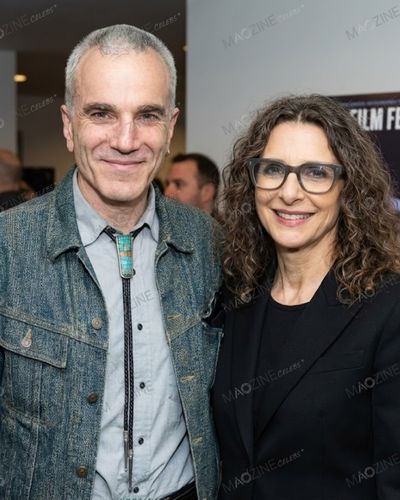
The meeting story reads like a scene drawn from a Miller play: Daniel Day-Lewis first encountered Rebecca at her father’s house while working on The Crucible. The chemistry was immediate, but both maintained a guarded approach to fame and public attention.
Marriage and an Unshowy Alliance
They married in November 1996, in a ceremony described by early coverage as private and intentionally low-key. Over the decades their bond has been defined less by public spectacle than by a shared devotion to craft and to a deliberately quiet domestic life. They eschewed industry parties and red carpet permanence—choosing instead the privacy of rural Ireland and Connecticut, locations that supplied both creative refuge and ordinary parenting rhythms.
The Dynamic of Partnership
Friends and collaborators often describe Miller as the steadying force or “anchor” in the relationship—someone who prefers the slow work of household and family care alongside a serious creative practice. Day-Lewis, famous for immersive method approaches, found in Miller a partner who respected the demands of such craft while safeguarding the family’s private life. Their marriage offers a model of dual careers that refuse to cannibalize one another—each partner carving space for singular obsessions.
The Next Generation: Rebecca Miller’s Children
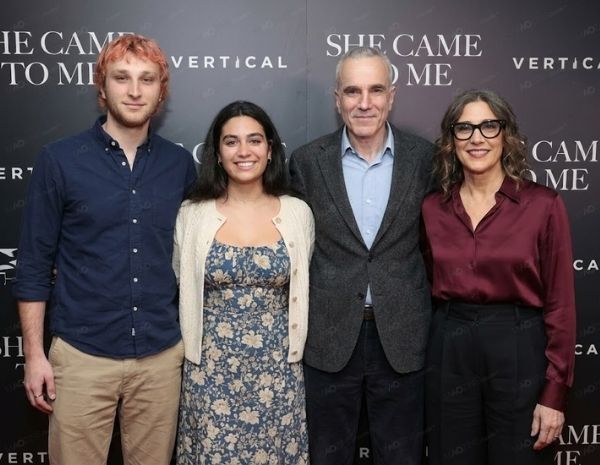
Raising children in the shadow of prominent parents often forces a different kind of artistry—the work of cultivating ordinary human lives in extraordinary circumstances. Rebecca Miller and Daniel Day-Lewis have taken care to raise their sons away from tabloid spectacle.
| Child | Parentage | Primary Vocation / Note |
|---|---|---|
| Gabriel-Kane Day-Lewis | Daniel Day-Lewis & Isabelle Adjani (stepchild to Rebecca) | Musician/model/actor; maintains an independent creative career. |
| Ronan Cal Day-Lewis | Rebecca Miller & Daniel Day-Lewis | Visual artist and filmmaker; educated at Yale, active in directing and painting. |
| Cashel Blake Day-Lewis | Rebecca Miller & Daniel Day-Lewis | Musician/composer; trained violinist with a focus on composition and performance. |
Each child reflects a different slant of the household’s creative inheritance—music, painting, film—yet all maintain careers oriented toward craft rather than celebrity. The family’s residency between Ireland and Connecticut allowed space for artistic apprenticeship away from the full-time glare of Hollywood.
Net Worth & Financial Standing
Estimating the net worth of artists who split assets privately is inherently imprecise. Public coverage and industry estimates suggest the family holds substantial assets—derived from film earnings, publishing (including rights tied to Arthur Miller’s estate), and property holdings in both the U.S. and Ireland. Multiple outlets present varying figures; the conservative reading places combined family wealth in the multimillion-dollar range, reflecting contributions from Miller’s films, books, and estate management as well as Day-Lewis’s long acting career. Because precise valuations fluctuate with rights sales and private investments, any figure should be treated as a rounded estimate rather than a definitive accounting. (Key career earnings: Sundance-winning films, notable festival premieres, and commercially backed releases like Maggie’s Plan and She Came to Me.)
Revenue streams in practical terms
| Revenue Stream | How it Contributes |
|---|---|
| Film directing & screenwriting | Director fees, backend points, festival awards increase profile and negotiating power. |
| Book and adaptation rights | Sales of novels and story rights (e.g., Personal Velocity as both book and film) provide recurring revenue. |
| Literary estate oversight | Management of Arthur Miller’s plays and related licensing can generate licensing fees for performances and adaptations. |
| Royalties & residuals | Film and TV residuals, plus international sales and streaming deals. |
Artistic Legacy & Cultural Place (Why Rebecca Miller Matters)
Rebecca Miller’s contribution to contemporary cinema is subtle rather than headline-grabbing. She belongs to a lineage of directors who sustained independent, character-driven filmmaking across changing industry climates. Her films have been platforms for actors to display nervous truth; they’ve also helped mainstream audiences taste a quieter art of feeling.
Her directorial approach—rooted in visual composition from painting and in a novelist’s attention to interior life—has made her a director’s director: admired among actors and filmmakers if not always the subject of loud awards-season chatter. Winning Sundance’s Grand Jury Prize and shepherding multiple well-regarded ensemble films places her in an influential, if discreet, position within American film culture.
Filmography (Selected Works)
| Year | Title | Role | Notable Details |
|---|---|---|---|
| 1995 | Angela | Writer/Director | Early feature that established her precise, lyrical style. |
| 2002 | Personal Velocity: Three Portraits | Writer/Director | Sundance Grand Jury Prize; three linked stories of women escaping confinement. |
| 2005 | The Ballad of Jack and Rose | Writer/Director | Starred Daniel Day-Lewis; intimate family drama. |
| 2009 | The Private Lives of Pippa Lee | Writer/Director | Ensemble cast; adapted from her own novel. |
| 2015 | Maggie’s Plan | Writer/Director | A wry romantic comedy featuring Greta Gerwig. |
| 2023 | She Came to Me | Writer/Director | Stars Peter Dinklage, Anne Hathaway; critics praised its charm and performances. |
Awards & Recognition
| Year | Award | Work |
|---|---|---|
| 2002 | Sundance Grand Jury Prize | Personal Velocity. |
| Various | Independent Spirit / Festival Awards | Recognition across independent film circles for writing and directing. |
Miller’s prizes are concentrated in the independent circuit—Sundance, Gotham-adjacent honors, and festival commendations—which is revealing: her influence accrues in contexts that prize auteurist integrity over box-office muscle.
Conclusion
Rebecca Miller has built a career on patient insistence: patient observation, patient composition, patient attentiveness to the human comedy. She has refused the spectacle of inherited fame and instead carved a body of work that rewards quiet immersion. Whether directing a festival darling or steering a star vehicle, she remains faithful to a worldview shaped by painters and playwrights: image and text should always be in conversation, and the domestic world remains an inexhaustible site for drama.
As she continues to make films—most recently She Came to Me—her voice in 2025 reads as both matured and nimble, someone who knows the cost of intimacy and how to dramatize it without flinching.
FAQ
Is Rebecca Miller related to Arthur Miller?
Yes. Rebecca Miller is the daughter of playwright Arthur Miller and photographer Inge Morath.
Who is Rebecca Miller's husband?
Her husband is actor Daniel Day-Lewis; they married in November 1996.
Did Rebecca Miller direct Daniel Day-Lewis?
Yes. She directed him in The Ballad of Jack and Rose (2005).
How many children does Rebecca Miller have?
Rebecca Miller and Daniel Day-Lewis have two children together—Ronan Cal and Cashel Blake—and Miller is stepmother to Gabriel-Kane Day-Lewis.
Is Rebecca Miller a filmmaker or an author?
She is both: a novelist and an award-winning filmmaker. Her books include Personal Velocity and The Private Lives of Pippa Lee, both of which intersect with her film work.
What is Rebecca Miller best known for?
She is best known for Personal Velocity, The Ballad of Jack and Rose, Maggie’s Plan, and She Came to Me, and for being the daughter of Arthur Miller and the spouse of Daniel Day-Lewis.
Where does Rebecca Miller live?
She divides her time between Connecticut and Ireland, preferring rural settings that support creative work away from tabloid attention.
Did Rebecca Miller work as an actress?
Yes—early in her career—but she moved into writing and directing to gain creative control.
What inspired Rebecca Miller to direct?
A background in painting and literature, combined with frustration at the limited agency of acting, led her to direct where she could shape both image and story.
Has Rebecca Miller won major awards?
Yes—Personal Velocity won the Sundance Grand Jury Prize. Her work has received continued festival recognition.
Does Rebecca Miller manage Arthur Miller’s estate?
She plays a meaningful role in preserving and licensing her father’s works and ensuring responsible stewardship of that literary legacy.
What books has Rebecca Miller written?
Notable titles include Personal Velocity and The Private Lives of Pippa Lee.
Is Rebecca Miller active on social media?
No. She keeps a deliberately low public profile and is not known for social media activity.
What themes are central to her films?
Her films explore identity, reinvention, the friction of domestic life, creative paralysis, and moral compromise.
Is Rebecca Miller working on new projects?
She continues developing film and literary work; she tends to announce projects near production rather than in early development.
How does Rebecca Miller work with actors?
She prepares tightly but allows actors room to find detail. Her sets favor quiet rehearsal and collaborative discovery within a strong visual plan.
What is Rebecca Miller’s estimated net worth?
Estimates place combined family assets in the multimillions, reflecting film, publishing, and estate management—figures reported vary and should be treated as approximations.
Can I watch Rebecca Miller’s films on streaming platforms?
Availability varies by region and service; festival films and independent titles often rotate through specialty platforms, streaming services, and digital rental stores.
Are there books or essays about Rebecca Miller’s work?
Critical essays and festival coverage explore her work; academic journals on film and gender studies occasionally analyze her films’ treatment of female interiority.