Pitbull Wife: Who Is Barbara Alba and The Truth About Their Private Life

Introduction
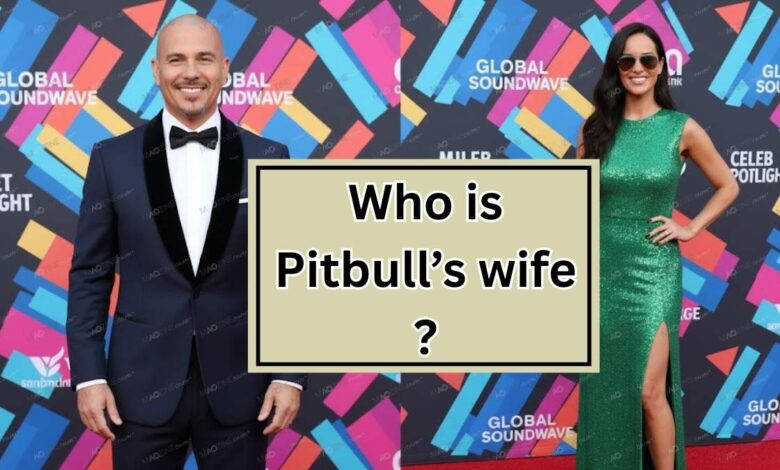
When you hear the name Pitbull, the world pictures pumped-crowds, international anthems, and the larger-than-life persona of Armando Christian Pérez. But behind that global stage one finds a quieter but indispensable figure: Barbara Alba, often referred to in public as “Pitbull’s wife” or “Pitbull singer wife.” Though she never claimed the spotlight, her role is central—she helped anchor the family unit, shaped the children’s upbringing, and stood at the interface where culture, celebrity and stability meet. This article explores Barbara Alba’s life: her early background, her partnership with Pitbull, the choices she made, and how her understated presence influences one of music’s biggest brands.
Table of Contents
Quick Bio of Barbara Alba
| Key | Detail |
|---|---|
| Full Name | Barbara Alba |
| Relationship | Former partner/co-parent of Pitbull |
| Public Profile | Private individual associated with celebrity-family life |
| Age | Believed born late 1970s/early 1980s (≈ 40s) |
| Residence | United States (likely Miami/Greater Miami region) |
| Children | Two children with Pitbull: Destiny Pérez & Bryce Pérez |
| Philanthropic Interests | Not publicly documented; likely focused on family/community values |
| Role in Family Business/Field | Co-parent and stabilizing figure in celebrity ecosystem |
| Social Media Presence | Virtually non-existent or private; minimal public appearances |
Who is Barbara Alba?
Barbara Alba is a figure often overshadowed by the fame of her former partner, Pitbull. Although she did not serve as his “wife” in the formal, legal sense, she remains the mother of his two publicly acknowledged children, Destiny and Bryce Pérez. Her significance lies less in public visibility and more in the crucial role she played behind the scenes: creating a stable environment while the spotlight roared. In a world where celebrity partnerships are often performative, Alba’s story is about holding quiet space—maintaining ordinary routines amid extraordinary circumstances. Through that lens, she emerges not as a footnote in a rock-star biography but as the architecture of a family system built to endure.
Quick Bio of Pitbull
| Key | Detail |
|---|---|
| Full Name | Armando Christian Pérez |
| Date of Birth | January 15 1981 |
| Nationality | American (Cuban-American heritage) |
| Occupation | Rapper, singer, songwriter, entrepreneur |
| Spouse/Partner | Former long-term partner: Barbara Alba (co-parent) |
| Children | Destiny Pérez, Bryce Pérez, plus additional children reported |
| Estimated Net Worth | Approx. US $100 million (2020s) |
| Residence | Miami, Florida |
| Known For | Global hits (“I Know You Want Me,” “Give Me Everything”), branding as “Mr. Worldwide,” philanthropy in education |
The Private Life of Barbara Alba
Barbara’s private life is deliberately understated. Unlike many partners of global superstars, she chose—or accepted—a path of minimal public exposure. The decision speaks volumes. When your partner is one of the most visible figures on earth, you can either amplify or protect. Barbara chose the latter. Her routines are shielded, her appearances rare, and her narrative largely unwritten. This level of discretion suggests values of stability, safety and protection. In an era of oversharing, saying less becomes a powerful statement. The children’s birthdays, schooling, family dinners—none of these have been headline fodder. That quieting of publicity becomes its own form of design: less about being unseen, more about being unswayed by external gaze. Through that unseen leadership, Barbara anchors the domestic sphere—the kind of environment that allows creative brilliance elsewhere to thrive without collapse at home.
Early Life and Background of Barbara Alba
The record of Barbara Alba’s early years is patchy by design—or by circumstance. Unlike her former partner, she never sought public biography. What we infer, however, is instructive. Growing up likely in a Hispanic-American context, possibly in Florida or an adjacent region, she would have encountered bilingual culture, immigrant ambition and the pull of both tradition and contemporary mobility. That humble background may explain her later comfort with being behind-the-scenes. She knew that identity isn’t crafted only in headlines—it is formed in routines, loyalties and local communities. When she entered the orbit of Pitbull’s rising star, she did so with fewer assumptions, allowing room for movement without needing constant validation. This foundation matters: it allowed her to engage with the consequences of fame without being consumed by them. In analytical terms, Barbara’s early history equips her for what celebrity cannot always provide: rootedness and discernment.


The Partnership with Pitbull: Beyond the Stage
Barbara Alba’s relationship with Pitbull lasted approximately a decade, from the early 2000s until their separation around 2011. In celebrity terms that’s a small eternity. But behind the timelines are systems: co-parenting agreements, privacy contracts, and shared values. Their partnership never became the public brand—it remained a private ecosystem. Barbara’s role during this era can be seen as the stabiliser: while Pitbull built his empire, she maintained the home front. That meant accommodating long tours, accommodating production schedules, and ensuring the children had continuity. Partnership in this sense becomes invisible management—negotiating power behind the lens, not for the lens. What makes it meaningful is how the quieter half of the relationship shaped the louder half’s sustainability. Without that home system, the stage persona risks burnout. The fact that their partnership ended without public acrimony (according to some sources) suggests that the underlying structure was one of mutual respect and co-responsibility—even if not fully told in media frames.
Barbara Alba’s Role Behind the Scenes of the Pitbull Brand
If Pitbull is the face, Barbara is part of the infrastructure. Though not credited publicly, she influenced brand-maintenance by keeping the domestic architecture intact. Consider: global tours don’t mesh with chaotic home lives; brand partnerships fade when family scandal erupts; philanthropic credibility heightens when children appear grounded. Barbara’s choice to avoid the limelight becomes strategic for the brand’s longevity. She is the cultural translator, the guardianship figure, the one who ensures that identity doesn’t fragment under pressure. Her role is not in the studio, but in the system that enables the studio. That hidden labor is rarely glamourised—but it’s essential. By managing privacy, protecting routines and supporting stability, she underwrites the narrative that Pitbull can show up every night and be full-throttle while still returning to roots that matter.
Children and Family Life: Destiny and Bryce
Barbara’s legacy is perhaps most clearly seen in the lives of her children: Destiny Pérez and Bryce Pérez. Raised while their father’s star ascended globally, their upbringing was designed for normalcy in abnormal circumstances. School rides, sibling rivalry, sibling support—all inside a context where brand deals and gold records lay in the backdrop. Barbara’s choice to avoid making their childhood public is telling. She offers them space to develop without the illusion of performance. That level of commitment to family choices reflects a deeper philosophy: the children inherit the opportunity but not the obligation to perform. In practical terms, she negotiated co-parenting, prioritized their emotional infrastructure and offered them a private world amid public noise. The children’s low-profile adulthood thus far signals not absence—but intention. It’s less about invisibility and more about agency.
Philanthropy and Community Engagement
Although Barbara has not spearheaded high-visibility philanthropic campaigns, her influence in this realm is embedded in the family’s larger ecosystem. Over the years, Pitbull’s philanthropic focus on education, youth mentorship and Miami-area programs has become a family value, and Barbara implicitly shapes the domestic cultivation of those values. Her quiet advocacy—choosing to raise children mindful of community and identity, keeping them grounded in local culture—is itself a form of philanthropy. It’s the long tail of impact: raising citizens rather than celebrities. In cultural-analysis terms, her approach demonstrates that social change isn’t only external grand gestures—it is anchored in how you raise the next generation. The stability, values and privacy she fosters are preventative philanthropy: reducing vulnerability before headline interventions ever kick in.
The Power of Privacy: Influence Without Publicity
In celebrity culture, visibility is currency. Barbara chose a different economy: discretion. Stealth influence—shaping home life, influencing values, protecting identity—is rarer but more durable. Her choice to remain out of the lens doesn’t mean irrelevance, it means resilience. When your influence is not measured by posts but by presence, you wield power differently. That power is quieter but less prone to collapse. For a family built on the intersection of fame and culture, that choice becomes strategic. Barbara’s privacy isn’t a retreat—it’s a foundation. It ensures the brand can scale without the personal fracturing. It offers the children margins. It allows the artist to thrive. That, in many ways, is her legacy.
Public Curiosity and Misconceptions About Barbara Alba
Public perception often simplifies Barbara as “Pitbull’s wife”—a phrase repeated despite the absence of a formal marriage announcement. That mislabeling reveals two things: the public’s hunger for tidy celebrity narratives, and her resistance to those scripts. The misconception that she sought fame via Pitbull ignores her deliberate choice to remain private. Another misconception is that her low public profile equals passivity. On the contrary, her influence is structural. By refusing to use her children for branding or herself as a shadow star, she challenges the notion that proximity to fame always means public presence. She emphasizes that a central role can exist without center stage. That nuance gets lost in click-bait, but it matters.
Legacy and Future
Barbara Alba’s legacy will likely be measured not in headlines but in the lives of her children and the longevity of the home system she helped create. The future may not include books or interviews, but the influence is already baked into the infrastructure of a family that supports a global brand while protecting the human lives within it. Her future might involve quieter ventures—community work, cultural mentorship, or simply maintaining the systems behind the spectacle. What matters is that the next chapter does not hinge on celebrity but on stability, authenticity and the next generation’s capacity to define themselves. In that sense, her influence is generational rather than momentary.
Conclusion
Barbara Alba may never headline a red-carpet gala. But her impact runs deeper than any flashing camera. In a world where celebrity often equates to exposure, she shows that power can be invisible, strength can be silent, and legacy can be lived without applause. As the co-architect of a home behind one of music’s most enduring brands, she exemplifies a different kind of partnership—one rooted in values, routine and restraint rather than spectacle. Her story reminds us that behind every brand-icon there is often someone unseen who keeps the foundation solid. Barbara Alba’s quiet leadership may never trend, but it may just outlast every tweet.
FAQs About Barbara Alba
- Is Barbara Alba Pitbull’s wife?
No. While she was Pitbull’s long-term partner and the mother of his two children, there is no verified public record of a formal marriage. - How many children do Barbara and Pitbull share?
They share two publicly recognized children: Destiny Pérez and Bryce Pérez. - Why does Barbara Alba keep a low profile?
She chooses privacy to protect her children, preserve normalcy, and maintain a stable foundation behind the celebrity brand. - What role did Barbara play in the Pitbull brand?
She played a stabilizing, behind-the-scenes role—maintaining the home system, enabling the artist’s global work, and shaping the children’s environment. - Is Barbara active on social media or in public life?
Very little information is publicly available about her social media presence; she appears to avoid public exposure. - Has Barbara carried out philanthropic work?
While not publicly high-profile, her influence is seen in the family’s education and community-focused values that guide how the children are raised. - Did Barbara and Pitbull break up?
Yes, their partnership appears to have ended around 2011; they continue to co-parent. - What legacy is Barbara Alba building?
A legacy of grounded family life, intergenerational values, and the notion that privacy can be a form of power. - Will Barbara Alba return to the public spotlight?
It’s uncertain, but current indications suggest she will continue to remain out of the limelight, prioritizing family and privacy. - How should we interpret Barbara Alba’s story?
Not as a celebrity supporting role, but as a case study in how the private systems behind public stars matter deeply—often more than the spotlight itself.