The Ultimate Guide to Oncepik: Boosting Creative Productivity With One Powerful Platform

Introduction
Are you tired of juggling multiple apps—task lists, visual boards, chat threads, file drives—just to get work done? Meet Oncepik: the platform that promises to bring order, creativity and team collaboration under one roof.
In this guide we’ll unpack what Oncepik is, why it matters now, and how you can use it to revolutionize your workflow. You’ll learn its core mission, features, benefits, use‑cases, how it stacks up against alternatives, and whether it might be right for you.
Table of Contents
The Core Concept / Mission
What is Oncepik and why was it created?
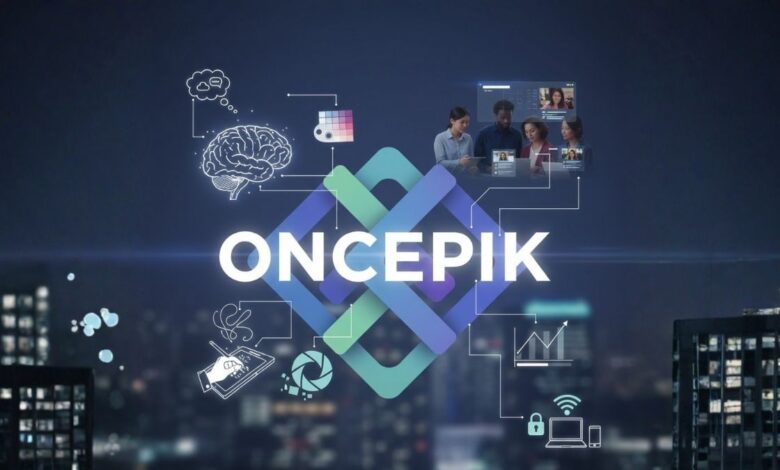
At its heart, Oncepik is a digital workspace that merges creative planning, task management, collaboration, media integration and visual organization into a single environment.
The mission: to reduce fragmentation in digital work—so you no longer switch between five tools to brainstorm, discuss, assign and track. Rather, ideas are visual, tasks are tracked, collaboration is live—and everything happens in one “workspace”.
This visual‑first approach is more than cosmetic: by designing around how human brains actually process information (images, boards, layouts) rather than just plain lists, Oncepik aims to make work more intuitive, more human‑centred.
In short: its foundational goal is creating a calm, connected workspace—where creativity and execution coexist.
Key Features of Oncepik

Visual Boards
One of the standout features is the visual board interface. Instead of traditional list‑oriented task tools, Oncepik lets you drag and drop images, notes, files, videos onto boards, arranging them freely.
Example: A marketing team might create a “Campaign Board” where mood‑images, draft copy, video links, and task cards live together. Then assign tasks directly from those cards—keeping the inspiration and execution in one place.
Smart Task Management
Each item on a board can become a task: assign it, set deadlines, track progress. Oncepik blends the flexibility of visual boards with the discipline of task‑tracking.
Example: A freelancer could use a board for a client project, where each visual piece (image, draft, client comment) is turned into a next step—avoiding separate apps for visual work and to‑do lists.


Real‑Time Collaboration
Oncepik supports live collaboration: multiple users can comment, tag, edit, view changes in real time. This reduces email‑threads and app‑hopping.
Example: A remote creative team working across time‑zones could open a board, leave feedback directly on visuals, update tasks, and all see the changes live—keeping momentum without the usual friction.
Media & Integration Support
The platform integrates images, videos, links and files seamlessly, all housed inside the workspace. This means your inspiration, references, and deliverables live in one place.
Example: A teacher designing a group project could upload video clips, reading links, live discussion threads, and student deliverables into one collaborative board—rather than bouncing between LMS, chat apps and file drives.
AI‑Powered Assistance
Oncepik includes built‑in AI features: helping users plan better by suggesting priorities, tracking deadlines, and optimizing workflows.
Example: The platform might suggest that your tasks are too clustered, recommend breaking them into smaller steps, or surface tasks that are overdue or at risk—acting like a subtle guide rather than a rigid system.
Secure Cloud Access & Custom Layouts
Work is stored in the cloud, accessible from multiple devices, with permission settings so you control who sees/edits what. The workspace is also customizable— you can adapt layouts to your style.
Example: A small business uses Oncepik, giving marketing access to certain boards, finance to others—each board has layout tweaks suited to the team’s workflow (e.g., Kanban vs free‑form).
The Lifestyle & Workflow Aspect

For Creative Professionals
If you’re a designer, photographer, writer, or any creative professional, Oncepik offers a visual studio environment: collect inspiration, storyboard ideas, collaborate with clients—without leaving the workspace.
Tip: Use a “Mood Board” template in Oncepik, drop in your references (images, links), then alongside create tasks like “Present to client” or “Refine draft” – all in the same view.
For Teams & Business Users
Teams get the benefit of consolidated workflows: project planning, asset sharing, task tracking, communication—all under one roof. This reduces the overhead of switching apps, misaligned files, lost comments.
Example: A startup with remote workers uses Oncepik instead of separate chat + task tool + drive: they create a board per project, assign tasks directly on visuals, update status—all visible to the whole team.
For Freelancers & Solo Users
Even if you’re working solo, Oncepik brings structure and flexibility. You can organise personal projects, client work, even learning goals visually. Rather than treat visuals and tasks separately, combine them into one space.
Tip: Create a “Personal Dashboard” board: drop in visuals of goals, link tasks like “Finish course”, schedule images of progress—make your workflow tangible and visual.
For Educators & Students
Education is another domain where Oncepik shines: think visual lesson plans, group projects, shared research boards. Students collaborate live, teachers monitor progress.
Example: A class uses Oncepik to upload research topics, each student contributes visuals or links, tasks are assigned (e.g., “Find 3 references”), and the teacher comments directly on the board—keeping everything in view.

Benefits & Advantages
Productivity Boost
By combining multiple tools into one platform, Oncepik reduces the “tool‑hopping” overhead—saving time and mental energy.
Benefit: Faster onboarding, less friction switching between apps, smoother workflows.
Visual Engagement
The visual‑first method increases clarity, memory retention, and engagement. Visuals are processed much faster than text.
Benefit: Projects feel more intuitive, inspiration stays visible, rather than buried in lists.
Flexible & Customizable Workflow
Oncepik adapts to different working styles—whether you prefer free‑form boards or structured tasks. It’s not rigid.
Benefit: You mould the workspace to your style, rather than forcing your style into the tool.
Improved Collaboration & Shared Visibility
Teams see the same board, tasks, visuals—everyone works from a single source of truth. Real‑time collaboration means less lag, fewer miscommunications.
Benefit: Clear responsibility, transparent workflows, reduced errors.
Monetization & Creator Economy Potential
For creators, Oncepik offers monetisation channels: subscriptions, tips, ads, community features.
Benefit: Turn creative work into income, stay in control, use one platform for creation and monetization.
Future‑Proof & Growing
The platform is still early in some respects, which means potential for growth, new features, and early‑adopter advantage.
Benefit: Get in early, shape workflows before mass adoption, benefit from improving features.
Practical Considerations: Pros, Cons, and Adoption Guide for Teams
When you think about incorporating Oncepik into your workflow, especially for teams, it’s important to consider not only its features but also several practical aspects that affect real-world implementation.
Pros & Cons of Oncepik
Like any platform, Oncepik comes with its strengths and limitations:
Pros
- Visual-First Interface: Ideal for creative teams (designers, marketers) who think in visuals.
- Unified Platform: Brings together ideation, collaboration, and execution in one space.
- Real-Time Collaboration: Excellent for hybrid and remote teams who need to work live and stay in sync.
- Reduces Tool Fatigue: Minimizes the need to juggle multiple apps like chat tools, task lists, and file storage.
Cons
- Learning Curve: Teams used to traditional list-based tools (like Asana or simple to-do lists) might need time to adjust to a visual interface.
- Limited Public Documentation: As a newer platform, Oncepik may have fewer guides, tutorials, and community threads compared to older tools.
- Integration Maturity: Some integrations may not yet be as robust as those of long-established platforms like Trello or Slack.
Comparison: Oncepik vs Traditional Tools
Understanding where Oncepik stands in the market helps make better decisions:
Oncepik vs Trello/Asana: Trello and Asana focus heavily on task lists, boards, and structured workflows. Oncepik adds a visual layer—mood boards, creative layouts, and collaborative canvases—making it perfect for teams that value both structure and creative brainstorming.
Oncepik vs Notion: Notion is excellent for documentation, databases, and knowledge management but offers limited visual flexibility. Oncepik, in contrast, is designed as a workspace centered on ideation and creative collaboration.
Pricing and Value for US Users
Although this section was originally written for U.S. users, its points apply to all businesses globally.
When evaluating pricing, focus not just on cost, but on value—the convenience and efficiency you get in return.
- Team Size: Determine which plan suits your number of team members.
- Efficiency Gains: Consider whether using Oncepik allows you to cut subscriptions to other tools (like separate chat or file-sharing apps).
- Collaboration Speed: Visual collaboration often leads to faster feedback and quicker project approvals.
When calculating ROI (Return on Investment), don’t just look at direct expenses. Factor in time savings, improved communication, and faster approval cycles.
Security, Privacy & Compliance
For businesses, data security is a top priority. Before adopting any new tool, make sure Oncepik provides the following safeguards:
- Secure Data Hosting: Data should be stored on secure servers that meet privacy standards like GDPR or equivalent U.S. frameworks.
- Encryption & Access Control: Your data must be encrypted, and you should control who can view or edit content.
- Data Ownership: You should have full ownership of your data and be able to export it whenever needed.
- Clear Terms of Service: The platform should clearly outline how it protects your intellectual property and creative assets.
Best Practices for Adopting Oncepik in Teams
Buying the platform is just the first step; proper implementation determines success. Follow these best practices for a smooth transition:
- Host Onboarding Sessions: Provide team training to ensure everyone understands how the visual workflow operates.
- Establish Standards: Create clear rules for file naming and project organization.
- Use Templates: Develop templates for recurring projects like “New Client Project” or “Monthly Marketing Campaign.”
- Define Collaboration Guidelines: Decide how feedback will be shared—through comments, tagging, or status updates.
- Review Performance: Periodically measure how effectively the new tool improves productivity and collaboration.
Final Thoughts
Through its visual and collaborative design, Oncepik opens new opportunities for teams that want to merge creativity with productivity. If your goal is to make your team not only more efficient but also more creative and aligned, Oncepik can be a powerful addition to your digital workflow.
How Oncepik Works: A Step‑by‑Step Breakdown

Step 1: Sign Up and Onboard
Create your Oncepik account. Choose a template (creative board, team project, personal dashboard). Many users note the onboarding is light and intuitive.
Step 2: Set Up Your Workspace
– Choose or design a board layout.
– Drop in your initial assets (images, files, notes).
– Define tasks or objectives on the board.
Example: For a marketing campaign, create sections: Inspiration → Strategy → Execution → Review. Place a visual in “Inspiration”, assign a task in “Execution”.
Step 3: Invite Collaborators & Define Permissions
Invite team members, clients or collaborators. Set permissions (view, comment, edit) per board or user. Oncepik’s cloud sync ensures changes are visible instantly.
Step 4: Use Visual Boards as Project Skeletons
Instead of working in separate notebook + file drive + task list, your board becomes the central canvas.
– Add visuals (image, video, link).
– Convert a visual or note into a task: Assign someone, set deadline.
– Use tags or progress indicators to track status.
Step 5: Monitor Progress in Real Time
Oncepik dashboards show tasks, progress bars, comments. Teams update boards live, everyone stays aligned. No more chasing different apps.
Step 6: Use AI and Analytics (If Available)
Oncepik’s AI may suggest next steps, highlight overdue tasks, analyze workflow bottlenecks. Useful for teams looking to optimize rather than just manage.
Step 7: Iterate and Adapt
As you work, the board evolves—move cards, reassign tasks, archive done items. Because the layout is visual, the evolution is visible. Use oncepik for new projects, templates, personal tracking, etc.
Step 8: Integrate With Other Tools & Devices
If Oncepik supports integrations (Google Drive, calendar, Slack etc) you can connect your ecosystem. Use mobile + desktop to pick up wherever you left off.
Step 9: Scale and Maintain
For teams or businesses: Create multiple boards (by department, project, client), use templates for repeat workflows, monitor overall productivity, set up permissions and archive old boards. Because Oncepik supports customization, it can grow with you.
Oncepik vs. Alternatives: A Full Comparison
| Platform | Focus | Oncepik’s Advantage |
|---|---|---|
| Trello | Simple Kanban task lists | More visual, integrated media & creativity. |
| Asana | Team project/task workflow | More creative board flexibility, visual expression. |
| Notion | Knowledge management + organization | Oncepik focuses more on visual workflow and collaboration + creativity. |
| Miro | Visual white‑board / brainstorming | Oncepik adds task management, media integration, and touch of productivity. |
Why Oncepik stands out:
– Visual‑first design + creative toolkit.
– Unified workflow (inspiration → task → collaboration) rather than just tasks or just boards.
– AI‑driven suggestions and modern features.
– Flexibility to serve individuals, teams, creatives, regardless of vertical.
Considerations:
– As a newer platform, may have fewer integrations or mature features compared to long‑established tools.
– Users comfortable with list‑based workflows may need an adjustment period.
– Pricing, enterprise features, offline access may yet evolve.
The Impact of Oncepik on Digital Workflows & Industries
Creative Industries
Graphic design, photography, content creation—all benefit from a workspace where visuals are first‑class objects. Oncepik allows teams to storyboard, iterate, and launch without flipping between apps.
Remote / Hybrid Teams
With distributed work becoming standard, a shared visual board reduces friction, aligns team members across locations and time zones, and supports asynchronous collaboration.
Education & Training
Teachers, students, trainers can use visual boards for lesson planning, group projects, shared research. Oncepik’s combination of media, tasks, and collaboration supports modern learning styles.
Small Businesses & Freelancers
Often budget‑conscious and juggling many hats, freelancers and small teams benefit from a “single hub” that handles different functions (planning, media, tasks, collaboration) with less overhead.
The Creator Economy
As more people monetize content, build communities, sell digital products, the visual/creative/monetisation features of Oncepik (subscriptions, tipping, creative sharing) allow creators to manage work and revenue in one space.
Future of Productivity Tools
Oncepik reflects key trends: visual interfaces, integrated workflows, less app‑bouncing, AI‑assisted productivity. It signals a shift from siloed tools toward unified, intuitive platforms.
Common Myths and Misconceptions
Myth: “Oncepik is just another task‑list app.”
Reality: While it includes task‑tracking, its core is visual boards + media + collaboration—not just lists.
Myth: “Visual tools are less efficient than traditional ones.”
Reality: Studies suggest visuals are processed faster, more memorable; Oncepik’s visual‑first design is intentional for cognitive efficiency.
Myth: “This platform is only for designers/creatives.”
Reality: While creatives get significant benefit, the platform is applicable to teams, educators, freelancers, business workflows.
Myth: “New platform = risky or immature.”
Reality: Yes, there are risks (integration maturity, feature gaps) but being early also offers the advantage of shaping workflows, early adoption, growth potential.
Myth: “Multifunctional platforms are too complex.”
Reality: The key is oncepik’s design — it aims for calm, clear, visual workflows. The learning curve may be lower than juggling multiple apps.
Why Oncepik Stands Out
– Unified ecosystem: one platform for inspiration, planning, execution, collaboration—reducing fragmentation of tools.
– Visual‑first: interfaces designed around images, boards, layouts rather than purely text/tables.
– Flexible workflows: adapt to individual style, team size, creative or business context.
– Future‑oriented features: AI assistance, creator monetisation, community features—aligning with modern digital needs.
– Cross‑domain applicability: from creatives to educators to remote teams—broad utility.
All of these combine to give Oncepik a unique position: not just a productivity tool, but a creativity & collaboration hub tailored for 2025 and beyond.
Final Thoughts
In an age where we switch apps dozens of times a day, where creativity and execution often live in separate tools, Oncepik offers a refreshing alternative: a single, visual space where ideas, tasks, teams and media converge.
If you’re a creator, a freelancer, a team leader, an educator—or just someone looking to organise work and life more visually and efficiently—Oncepik deserves a serious look.
Ultimately: work doesn’t have to feel fragmented. It can feel integrated, calm, aligned. Oncepik embodies that possibility—and might just be the platform to help you make it real.
Frequently Asked Questions (FAQs)
1. What exactly is Oncepik?
Oncepik is a digital workspace platform that combines visual boards, task management, media integration and real‑time collaboration into one unified environment.
2. Who can benefit from using Oncepik?
It benefits a wide range of users: creative professionals (designers, content creators), remote teams/ businesses, freelancers/solopreneurs, educators and students.
3. How is Oncepik different from tools like Trello, Asana, or Notion?
While those tools focus on tasks, knowledge or lists, Oncepik emphasises visual workflows, media‑rich boards, integration of creative and execution phases, and collaboration—all in one space.
4. What are the main features I should use to get started?
Start with a visual board. Add your assets (images, files, notes). Then convert items into tasks with assignments and deadlines. Invite collaborators and set permissions. Explore templates and customise layouts. Use AI suggestions if available.
5. Is Oncepik suitable for teams or only individuals?
Yes, it is suitable for teams. Its collaboration, permission controls, board‑sharing, live updates make it ideal for teams—especially remote or creative ones.
6. Are there any drawbacks or things to watch out for?
Yes—because it’s newer, some integrations may be less mature than legacy tools. Users accustomed to text/list workflows may need adaptation time. Also, advanced enterprise features or offline access may be limited or evolving. RankerLink
7. How do I know if Oncepik is right for me?
If you value visual workspaces, want to merge media and tasks in one place, need collaboration across devices, and are open to adopting a new workflow—then yes, it’s likely a good fit. If you heavily rely on a specific tool ecosystem that isn’t yet integrated, evaluate integration support.
8. What is Oncepik and how much does it cost?
Oncepik is a visual collaboration and productivity platform for teams and creatives. Pricing varies depending on the number of users and features, so check the official site for updated plans.
9. Is Oncepik suitable for small businesses or freelancers? Yes, Oncepik fits freelancers and small agencies who value creative collaboration and need both ideation and project tracking in one tool.
10. How does Oncepik compare to Asana or Trello? While Asana and Trello excel in task management, Oncepik focuses on visual creativity and real-time collaboration — ideal for design, branding, and marketing projects.
11. Can Oncepik integrate with other tools my team uses? Yes, Oncepik supports various integrations like Google Workspace, Slack, and design software to streamline workflows. (Aap ko check karna hoga ke yeh daawa (claim) durust hai ya nahi).
12. Is Oncepik secure and compliant for businesses? Yes, it follows standard security measures such as data encryption, access control, and regular backups, though users should verify compliance based on their industry.
13. What types of teams benefit most from Oncepik? Creative teams, marketing agencies, designers, and remote teams that blend brainstorming and execution benefit most from Oncepik’s visual collaboration model.