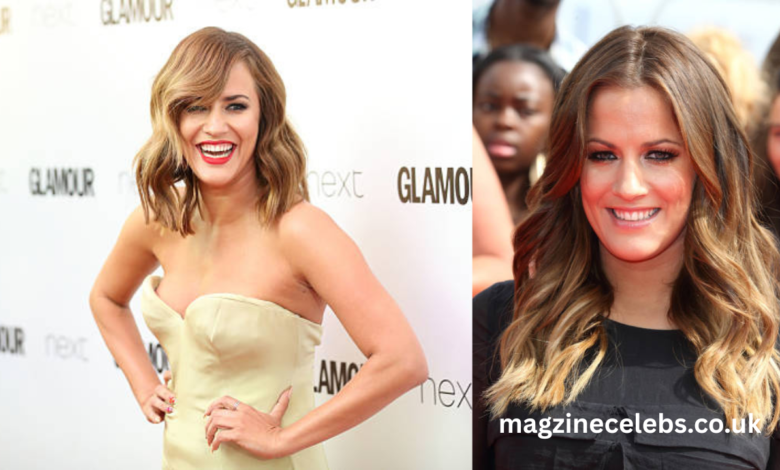
She was the “Queen of Saturday Night TV,” a woman whose infectious laugh and signature slow-motion strut became synonymous with British pop culture. Caroline Flack was more than just a presenter; for millions of viewers, she was the warm, empathetic friend who guided them through the highs and lows of Love Island and The X Factor.
Table of Contents
However, beneath the glitter and the prime-time slot lay a complex reality of mental health struggles, intense media scrutiny, and a legal battle that ultimately ended in tragedy. Years after her death in February 2020, the conversation around Caroline Flack has shifted from tabloid gossip to a serious examination of press ethics, the justice system, and the true cost of fame.
With the release of the 2025 Disney+ documentary Caroline Flack: Search for the Truth and renewed calls for “Caroline’s Law,” understanding her story is more relevant now than ever. This post explores her rise to stardom, the truth behind the legal proceedings, and the enduring legacy of the #BeKind movement.
Quick Bio and 2026 Net Worth Status
Before diving into her story, here are the key facts regarding Caroline’s life and estate.


| Category | Details |
| Full Name | Caroline Louise Flack |
| Born | November 9, 1979 (Enfield, London) |
| Died | February 15, 2020 (Stoke Newington, London) |
| Key Shows | Love Island, Strictly Come Dancing, The X Factor, I’m a Celebrity… Get Me Out of Here! NOW! |
| 2026 Estate Value | £827,000 (Net). While reports estimated her fortune at over £2 million, official probate figures released post-death confirmed a net value of roughly £827k after debts and tax. |
| Beneficiaries | As Caroline died intestate (without a will), under UK law, her estate passed to her parents. |
From Bo’ Selecta! to Ballroom Glory: How Did Caroline Flack Start?
Caroline Flack’s journey to the top wasn’t an overnight success story; it was a grind through the ranks of British television that showcased her versatility.
Born in London and raised in Norfolk, she studied dance and musical theatre, skills that would later define her career. Her first break came in 2002 playing Bubbles on the sketch show Bo’ Selecta!. While a minor role, it got her foot in the door.
Throughout the mid-2000s, she became a staple of children’s and morning television. She co-presented TMi with Sam and Mark on CBBC, proving she could handle live TV chaos with humor. But her transition to mainstream adult entertainment began when she took over hosting duties for I’m a Celebrity… Get Me Out of Here! NOW! in 2009.
The Strictly Turning Point
In 2014, Flack participated in Strictly Come Dancing, a move that catapulted her from a well-liked presenter to a national treasure. Partnered with Pasha Kovalev, she didn’t just participate; she dominated.
Her contemporary showdance routine in the final is widely regarded as one of the greatest moments in the show’s history, earning her a perfect score of 40. Winning the glitterball trophy solidified her status as a triple threat: she could present, she could dance, and she could win the public’s heart.
The Love Island Era: Defining a Generation of Reality TV
If Strictly made her a star, Love Island made her an icon. When ITV relaunched the dating show in 2015, they needed a host who could balance the drama with empathy. Flack was the perfect fit.
For five seasons, she was the face of the UK’s biggest cultural phenomenon. She wasn’t just a distant host; she acted as a confidante to the islanders, often comforting them during emotional dumping ceremonies. Her slow-motion walk into the villa became a signature move, imitated by fans across the country.
Key Achievements during this era:
- BAFTA Win: In 2018, she accepted a BAFTA for Love Island (Best Reality and Constructed Factual).
- Rating Records: Under her tenure, the show broke ITV2 viewing records, reaching millions of viewers nightly.
- Uber-Fame: This period marked the height of her celebrity status, but also the height of the media intrusion into her life.
Public Smiles, Private Struggles: What Was Happening Behind the Scenes?
While Caroline projected an image of bubbly confidence, those closest to her knew a different story. The 2025 documentary Caroline Flack: Search for the Truth shed new light on the depth of her mental health battles.
Her mother, Christine Flack, revealed that Caroline had struggled since her teenage years. Reports and interviews following her death confirmed that she had been diagnosed with bipolar disorder, a condition she kept private for fear of it damaging her career.
The pressure of the “charmed life” narrative weighed heavily. In her autobiography, Storm in a C Cup, she wrote about the disconnect between her public persona and her private anxiety. She noted that while newspapers had legal lines they couldn’t cross, social media was the “Wild West,” where abuse went unchecked.
The 2019 Incident and Legal Battle: Why Was It Called a “Show Trial”?
To understand the tragedy of Caroline Flack, one must understand the specific legal mechanisms that occurred between December 2019 and February 2020. This period is often misunderstood or oversimplified in general reporting.
On December 12, 2019, police were called to Flack’s flat following an altercation with her boyfriend, Lewis Burton. Flack had self-harmed and was distressed. She was arrested and charged with assault by beating.
The Contentious Decision to Charge
The controversy and what her family later labeled a “show trial” stems from the disagreement between the police and the Crown Prosecution Service (CPS).
- Initial Assessment: The initial prosecutor recommended a caution, citing that it was a domestic incident and Burton did not support the prosecution.
- The Appeal: The Metropolitan Police appealed this decision. It is relatively rare for police to appeal a CPS decision to caution, but they argued that domestic violence cases should be pursued regardless of the victim’s wishes to prevent escalation.
- The Charge: The appeal was successful, and the decision was upgraded to a criminal charge.
This decision terrified Flack. She believed that a public trial would end her career and her life as she knew it.
Timeline of the Legal Escalation
| Date | Event | Significance |
| Dec 12, 2019 | Arrest at Islington flat | Flack taken into custody; Burton sustains minor head injury. |
| Dec 23, 2019 | Court Hearing | Flack pleads not guilty. Bail conditions ban her from contacting Burton. |
| Jan 2020 | CPS Review | Despite Burton withdrawing support, CPS proceeds with the case. |
| Feb 14, 2020 | Valentine’s Day | Flack learns the trial will definitely go ahead. |
| Feb 15, 2020 | The Tragedy | Flack takes her own life hours after learning the trial is confirmed. |
What Did the 2025 Disney+ Documentary Reveal?
In late 2025, Disney+ released Caroline Flack: Search for the Truth. Unlike previous tributes, this documentary focused on the procedural failures alleged by her family.
The documentary features Christine Flack formally investigating the decision-making process of the CPS and the Met Police. A major revelation in the documentary was the dispute regarding the “weapon.”
While initial reports and the prosecution claimed Flack used a lamp to strike Burton, the defense and family have consistently argued it was a mobile phone, and that the injury was accidental during a scuffle.
The documentary also highlighted that Flack had lost her role on Love Island and was facing financial uncertainty, compounding her distress. It painted a picture not of a violent aggressor, but of a woman in the midst of a mental health crisis who needed medical intervention, not criminal prosecution.
Media Intrusion: Did the Press Go Too Far?
The media coverage regarding Caroline Flack remains a case study in toxicity. Following her arrest, the tabloid press turned on her viciously.
- The “Caroline Smack” Headline: The Daily Star ran a front-page headline punning on her name, branding her violent before a trial had taken place.
- The Valentine’s Day Card: One day before her death, The Sun published an article about a novelty Valentine’s card that mocked the assault charge with the line “I’ll f***ing lamp you.”
- Social Media Pile-on: Twitter users dissected her personal life, her age gap with partners, and her appearance.
The inquest into her death confirmed that the fear of this press coverage was a primary factor in her decision to take her own life. Coroner Mary Hassell recorded a verdict of suicide, stating, “I find the reason for her taking her life was she now knew she was being prosecuted for certainty, and she knew she would face the media, press, publicity.”
#BeKind: Has Anything Actually Changed?
In December 2019, during the height of the media storm, Caroline posted a quote to Instagram: “In a world where you can be anything, be kind.”
Following her death, this became a global mantra. The hashtag #BeKind trended for weeks. Merchandise was sold to raise money for mental health charities (Samaritans), and there was a collective promise to do better online.
However, five years later, critics argue the movement was performative. While awareness of mental health has improved, the “cancel culture” cycle and rapid judgment on social media platforms like X (formerly Twitter) and TikTok remain prevalent.
The 2025 documentary has reignited this conversation, asking viewers if they have truly learned the lesson Caroline left behind.
Legislative Impact: Will We Ever See “Caroline’s Law”?
Immediately after her death, a petition on 38 Degrees calling for “Caroline’s Law” gained over 850,000 signatures. The proposed law sought to make media bullying and harassment a criminal offense.
While the UK government did not pass a specific “Caroline’s Law,” the pressure contributed to the Online Safety Act, which aims to hold platforms accountable for harmful content.
Update Nov 2025: Following the release of the new documentary, a fresh petition was launched on Change.org by campaigner Leonie Darbyshire. It demands stricter regulations on press intrusion into the private lives of those facing mental health crises. As of early 2026, the petition is gaining momentum, though no new legislation has formally passed.
Conclusion
Caroline Flack’s legacy is dual-sided. On one hand, she is remembered as the vibrant, talented host who defined a golden era of British reality TV. On the other, she serves as a tragic warning about the fragility of mental health and the devastating power of unchecked media scrutiny.
The release of the 2025 documentary has ensured that her story is not forgotten and that the difficult questions regarding her prosecution are finally being asked. As we move through 2026, the best way to honor her memory is to move beyond the hashtag and practice the empathy she advocated for in her final months.
Frequently Asked Questions
What was the official cause of Caroline Flack’s death?
A coroner’s inquest recorded a verdict of suicide by hanging. The coroner ruled she took her life because she knew she was facing prosecution and press intrusion.
Did Caroline Flack actually hit Lewis Burton with a lamp?
This is disputed. The prosecution alleged a lamp was used. However, Flack and her defense maintained she had a phone in her hand during a scuffle, and the injury was not caused by a lamp.
What happened to the assault charge after she died?
The legal proceedings were terminated immediately upon her death.
Who inherited Caroline Flack’s money?
Because she died without a will (intestate), her estate, valued at £827,000, went to her parents.
Was Lewis Burton prosecuted?
No. Lewis Burton was not on trial; he was the alleged victim. He publicly stated he did not support the prosecution of Flack.
What is the 2025 documentary about?
Caroline Flack: Search for the Truth (Disney+) features her mother investigating why the CPS charged Caroline despite the police initially recommending a caution.
Who replaced Caroline Flack on Love Island?
Her friend Laura Whitmore took over hosting duties for the Winter 2020 series and subsequent seasons, followed by Maya Jama.
Did Caroline Flack have children?
No, Caroline Flack did not have any children.
Where is Caroline Flack buried?
She was laid to rest in a private ceremony in Norfolk, where she grew up.
What did the CPS say in their 2025 statement?
In November 2025, the CPS released a statement reaffirming that they believe the decision to charge Flack was correct based on the evidence, asserting that celebrity status does not influence charging decisions.