Introduction
Ask a stadium full of strangers who Pitbull is and the answers roll out in chorus: hitmaker, crowd-mover, “Mr. Worldwide.” Ask who Armando Christian Pérez is—the person who becomes Pitbull when the lights hit—and the room gets quieter. That gap between the public brand and the private man is where the most interesting story lives. The global figure sells out arenas; the private individual builds routines, raises children, obsesses over craft, and calibrates an empire that stretches from music to education initiatives. This article treats Pitbull as a study in dual identity: the charismatic public force and the disciplined human being who built it. We’ll map how the persona was engineered, how the father-child immigrant story shaped his decisions, and why a careful commitment to privacy remains central to the work. Consider this an X-ray of fame—less tabloid, more blueprint.
Table of Contents
Quick Bio of Pitbull
| Key | Detail |
|---|---|
| Full Name | Armando Christian Pérez |
| Relationship | Private individual behind the public figure “Pitbull” |
| Public Profile | Global recording artist, entrepreneur, cultural figure |
| Age | Born in 1981 |
| Residence | Strong roots in Miami, Florida |
| Children | A devoted father; keeps specifics measured and family-first |
| Philanthropic Interests | Education access, youth uplift, community-building |
| Role in Family Business/Field | Founder/architect of the “Pitbull” brand; recording artist and executive |
| Social Media Presence | Public as “Pitbull,” with carefully curated personal boundaries |
Who is Pitbull?
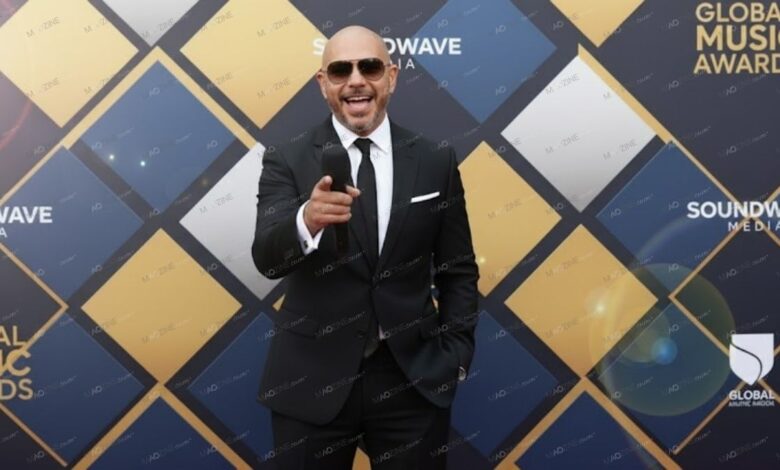
Pitbull is both a person and a project. As Armando Christian Pérez, he’s the strategist who designs the project; as “Pitbull,” he’s the performance—kinetic, polished, omnipresent. The man offstage is fluent in discipline: fitness, writing sessions, deal review, and ritual. The onstage persona is fluent in joy and velocity: “Dale,” sunglasses, tuxedos, hook-laden choruses that turn a crowd into a single moving organism. To understand Pitbull’s significance is to grasp the marriage of immigrant grit with pop maximalism. He’s less a traditional celebrity than a living case study on how to weaponize charisma into a multinational brand without losing sight of home. Privately, he prioritizes family, routine, and control over what the public sees. Publicly, he gives an audience permission to celebrate. The tension between those halves—reverent privacy and exuberant performance—creates the engine that keeps the career humming.
The “Mr. Worldwide” Persona
| Key | Detail |
|---|---|
| Full Name | “Pitbull” (Public Stage Persona of Armando Christian Pérez) |
| Date of Birth | N/A (Persona is a constructed identity) |
| Nationality | Represents Cuban-American Miami global culture |
| Occupation | Recording artist, touring act, brand ambassador |
| Spouse | N/A (Persona; distinct from private relationships) |
| Children | N/A (Persona) |
| Estimated Net Worth | Public estimates vary; the persona is the revenue engine |
| Residence | Lives wherever the tour and campaigns require; roots point to Miami |
| Known For | Global party anthems, cross-genre collaborations, high-octane live shows, lifestyle branding |
The Private Life of Pitbull (Armando Christian Pérez)
The private Armando is pragmatic, almost spartan. The rituals that maintain a stadium-scale life are unflashy: early workouts, vocal conditioning, calendar discipline, and quiet time to think before the world starts asking for pieces of him. Privacy isn’t an accident; it’s an operating system. When your public job is to pour energy into tens of thousands at once, the recovery must be deliberate—family dinners that aren’t content, conversations that don’t become interviews, and neighborhoods that still feel like home. The private Armando guards the boundary between narrative and noise, because the wrong kind of exposure can dilute the very magic people pay to see.
He also keeps a grip on tone. The Pitbull you meet on stage is exuberant; the private man is measured. He tracks what the brand can carry without breaking—what partnerships align with his story, what musical turns make sense for his audience, and which offers to quietly decline. That balance creates a paradox: the more carefully he protects his unshared life, the freer the onstage persona becomes. The result is an artist who can remain generous in public because he has a sanctuary in private.


Early Life and Background of Pitbull
Before the arenas, Miami was the classroom: bilingual radio, street evangelists for hustle, neighbors who understood migration as muscle memory. The Cuban-American story isn’t a footnote; it’s the foundation. In that environment, Armando learned to hold contradictions: grateful and hungry, proud and adaptable, local and global. The music was a passport, but the neighborhood was a compass. Early freestyle raps sharpened the instinct to read a room; early missteps taught the value of reinvention without apology.
The family narrative shapes his leadership style. Raised amid economic constraint and cultural abundance, he learned to convert limits into leverage. The sonic arc—hip-hop roots, pop choruses, Latin rhythms—mirrors that flexibility. He isn’t simply chasing trends; he’s translating Miami’s social map into a pop grammar the world can sing. That skill—turning the personal into the universal without sanding off the heritage—explains his durability more than any sales figure. Before the brand, there was a boy observing how people move, celebrate, argue, and forgive. Those observations became songs. Those songs became a business.
Balancing the Man and the Persona
It sounds strange to speak of a person “marrying” a persona, but that’s the most honest way to describe the relationship between Armando and “Pitbull.” Every day requires vows to protect the work and the self from each other. The persona demands constancy—if the world buys a ticket for euphoria, the world should get euphoria. But constancy risks calcification; artists who never shed a skin eventually lose their pulse. The private Armando therefore renegotiates the vows: evolve the sound, refresh the look, keep the ethos.
This partnership has rules. Rule one: the brand exists to serve the audience, not the algorithm. Rule two: the private man sets the moral perimeter—what endorsements align with family and community values, and what crosses the line. Rule three: the persona can pivot only as fast as the private man can sustain. The point isn’t to hide; it’s to remain whole. In a culture that rewards oversharing, choosing curation is a radical act. It’s how he can be “on” at 110% on Saturday night and still show up as a father, friend, and owner-operator on Monday morning.
Pitbull’s Role Behind the Scenes in the Success of the “Pitbull” Brand
Behind the lights, he’s the architect. Sessions are run like design sprints: find the hook that compresses joy into twelve syllables, pick the tempo that persuades feet, layer the rhythm so it lands across continents. Touring is a logistics puzzle—city sequencing, recovery windows, setlist arcs that respect the classics while testing the new. Partnerships are vetted for story fit: does this campaign extend the “Mr. Worldwide” narrative or distract from it?
He treats the brand as a platform with multiple elevations. The top tier is music and touring—where emotion is minted nightly. The second tier is commercial alignment—spirits, fashion, hospitality—where the lifestyle is codified. The third tier is social impact—education, city pride, youth programs—where the legacy is rehearsed in real time. In each tier, Armando is the product manager, gatekeeper, and editor. The signature strength isn’t just charisma; it’s governance. That’s how he’s avoided the trap that swallows many pop empires: expansion without coherence. His executive principle is simple—if the choice doesn’t harmonize with the story, it’s a no.
Children: Protecting Childhood in a Public Life
Parenthood inside a global brand requires a different kind of stagecraft. Armando draws a clear line between the cheering crowd and the quiet table where homework, jokes, and family debates happen. Publicly, he acknowledges being a father; privately, he engineers a bubble where childhood can unfold without becoming content. Two children—Destiny Pérez and Bryce Pérez—are most often referenced in media, with occasional mentions of half-siblings. But the rule holds: names may surface, lives do not.
Why such intensity around boundaries? Part of it is biography. Having grown up with a mother who carried double duty, he knows the cost of instability, the ache of absence, and the value of an adult who shows up—consistently. The calendar bends around that promise. Tours are plotted with recovery windows that aren’t just for the voice; they’re for the role that matters most at home. The children learn that fame is a job, not an identity. They see their father make choices that communicate values more loudly than speeches: turning down misaligned partnerships, saying yes to school events, and keeping family milestones unmonetized. The aim isn’t to raise protégés for the spotlight—it’s to raise grounded adults who understand that power without privacy becomes a cage, and that real wealth is measured in time, safety, and trust.
For fans, this might feel like distance. For a parent, it’s design. By refusing to trade their childhood for clicks, he preserves not only their freedom but also the creative battery that powers his public generosity. The crowd gets the spectacle; the kids get the sanctuary.
Former Partner & Co-Parenting: Barbara Alba
The public often defaults to the term “ex-wife,” but reliable public records don’t confirm a marriage; what’s clear is that Barbara Alba has long been acknowledged as a significant former partner and co-parent in Armando’s life, and the mother of Destiny and Bryce. The distinction matters—not for gossip, but for governance. It signals a deliberate approach to intimacy and publicity: keep legal and personal lines clean, keep the family ecosystem calm, and keep headlines out of the living room.
Alba’s presence in the family story reads as steadiness. She has kept a profile as private as his parenting philosophy demands, helping to ensure that the children’s lives are structured around routine rather than rumor. Co-parenting, in this model, isn’t a court schedule; it’s a culture—predictable, respectful, insulated from the churn of celebrity narratives. Think logistics over theatrics: who’s at the recital, who’s at the parent-teacher chat, who’s guarding the calendar from being swallowed by commitments that don’t serve the kids.
From a cultural-analysis lens, this is a blueprint for modern celebrity families who refuse to turn separation into spectacle. It demonstrates that you can be a global brand and still practice small, quiet competencies: clear communication, coordinated boundaries, and a shared refusal to let the public’s curiosity set the family’s tempo. The benefit is generational. Children raised in that climate inherit not only resources but also the emotional grammar to navigate love, conflict, and privacy with dignity.
Philanthropy and Community Engagement
If the music is the invitation, the community work is the RSVP. Education headlines the effort—not as charity, but as infrastructure. The logic is straightforward: talent is everywhere; access is not. Helping build and support schools and youth pipelines is a long play—less glamorous than a product launch, more transformative than a photo op. It’s also an echo of his own origin story: classrooms, mentors, and neighborhoods that redirected energy into craft.
Philanthropy here looks like city-building: scholarships, mentorship networks, performance opportunities for youth, and civic pride campaigns that treat students as stakeholders rather than recipients. In the calculus of fame, this is the hedging function: converting attention into scaffolding that will outlast the current chart cycle. The core belief is that cultural capital carries an obligation—to open doors, to normalize excellence, to make it a little easier for the next kid with a notebook and a dream.
The Power of Privacy: Influence Without Publicity
Privacy is often miscast as withdrawal. In Armando’s world, it is a catalytic asset. By refusing to monetize every inch of life, he preserves the mystery that makes performances feel larger than life. The audience gets the spectacle; the family gets the human. That separation is also a mental-health technique: the persona absorbs the scrutiny so the person can stay supple and sane. In practice, privacy lets him say no without drama, change direction without spectacle, and take creative risks without telegraphing fear.
It also increases trust. Partners know the brand will not overpromise and underdeliver; fans know the artist won’t chase trends at the cost of identity; communities know support won’t vanish after the press release. Privacy, in other words, is governance again—an internal standard that refuses to allow exposure to outpace intention. That’s why the public image remains bright rather than brittle: it’s powered by a battery the world never drains.
Public Curiosity and Misconceptions About Pitbull
The clean tux and sunglasses can tempt shallow readings: that he’s “only” a party MC, or that the catalog is pure confection. Yet the seeming simplicity is engineered. Writing universally singable hooks requires ruthless editing. Sustaining a global tour schedule without scandal requires personal systems. Building a cross-category brand that doesn’t feel cynical requires taste. The misconception isn’t just about the music; it’s about the mind behind it. The party is the art; the craftsmanship is the secret.
Another misunderstanding: that privacy equals distance. In reality, he is hyper-accessible through the work. The songs are permission slips to feel alive; the shows are civic rituals; the partnerships are culture-building exercises. He’s less aloof than precise. The public gets what amplifies joy; the rest stays in the vault—not out of contempt, but as a discipline that protects the supply chain of meaning.
Legacy and Future
A durable legacy is a choreography of three movements: impact, inheritance, improvement. Impact is what the music and shows have already achieved—millions of people with a shared memory of joy. Inheritance is what the kids and the city receive—proof that talent can be systematized into opportunity for others. Improvement is the long arc—catalog stewardship, mentorship of new artists, and civic institutions that keep scaling after the spotlight shifts.
The future chapter likely emphasizes curation over conquest: selective releases that deepen the catalog rather than flood it; tours designed as cultural residencies; partnerships with museums, schools, or city festivals that fuse party and pedagogy. Think less volume, more voltage. The aim isn’t to be everywhere at once anymore; it’s to be exactly where presence does the most good—artistically, commercially, and communally.
Conclusion
The world knows Pitbull as shorthand for global celebration. This profile argues that the celebration was never accidental. Behind the grin is a producer’s ear, an operator’s brain, and a father’s calendar. Armando Christian Pérez built a persona that liberates crowds while protecting the human being required to power it. That’s the trick most careers never master. Joy is the product; discipline is the factory; privacy is the security system. Together, they’ve created not just hits but a framework for longevity. If fame is a storm, Armando’s private life is the levee—quiet, sturdy, and absolutely essential.
FAQs About Pitbull
- Is Pitbull a brand or a person?
Both. Armando Christian Pérez is the person; “Pitbull” is the constructed public persona he performs and manages. - Why does Pitbull keep parts of his life private?
Privacy protects family, preserves sanity, and sustains the onstage persona. It’s a system for longevity, not secrecy for its own sake. - How did Miami shape Pitbull’s music?
Miami’s Cuban-American culture, bilingual soundscape, and immigrant grit gave him the palette to translate local energy into global pop. - What does Pitbull actually do behind the scenes?
He’s the architect—overseeing songwriting, tour design, partnerships, and philanthropic initiatives with a CEO’s discipline. - How does he balance being a parent with global fame?
Through strict boundaries, consistent family routines, and a “family-first, brand-second” rule. His children get stability; his audience gets excellence. - Are reports about his ‘ex-wife’ accurate?
The accurate term is former partner/co-parent—Barbara Alba—who shares in raising Destiny and Bryce Pérez. There’s no verified record of a formal marriage. - Who are Pitbull’s children?
His most mentioned children are Destiny Pérez and Bryce Pérez. Both maintain private lives, reflecting their father’s wish to shield them from publicity. - Is Pitbull’s philanthropy a marketing tool?
Not at all. His focus on education and youth empowerment comes from experience—he builds schools and supports initiatives for long-term impact. - Where is Pitbull’s career headed next?
Toward curation: fewer but more refined projects, global residencies, and collaborations that blend culture, music, and education. - What defines Pitbull’s legacy?
Transforming immigrant hustle into a universal language of joy—while ensuring that success uplifts both his community and the next generation.